

Environmental Law Clinic Collaborates with Yaksa Pelestari Bumi Berkelanjutan (YPBB): Promoting Awareness and a Zero Waste Lifestyle
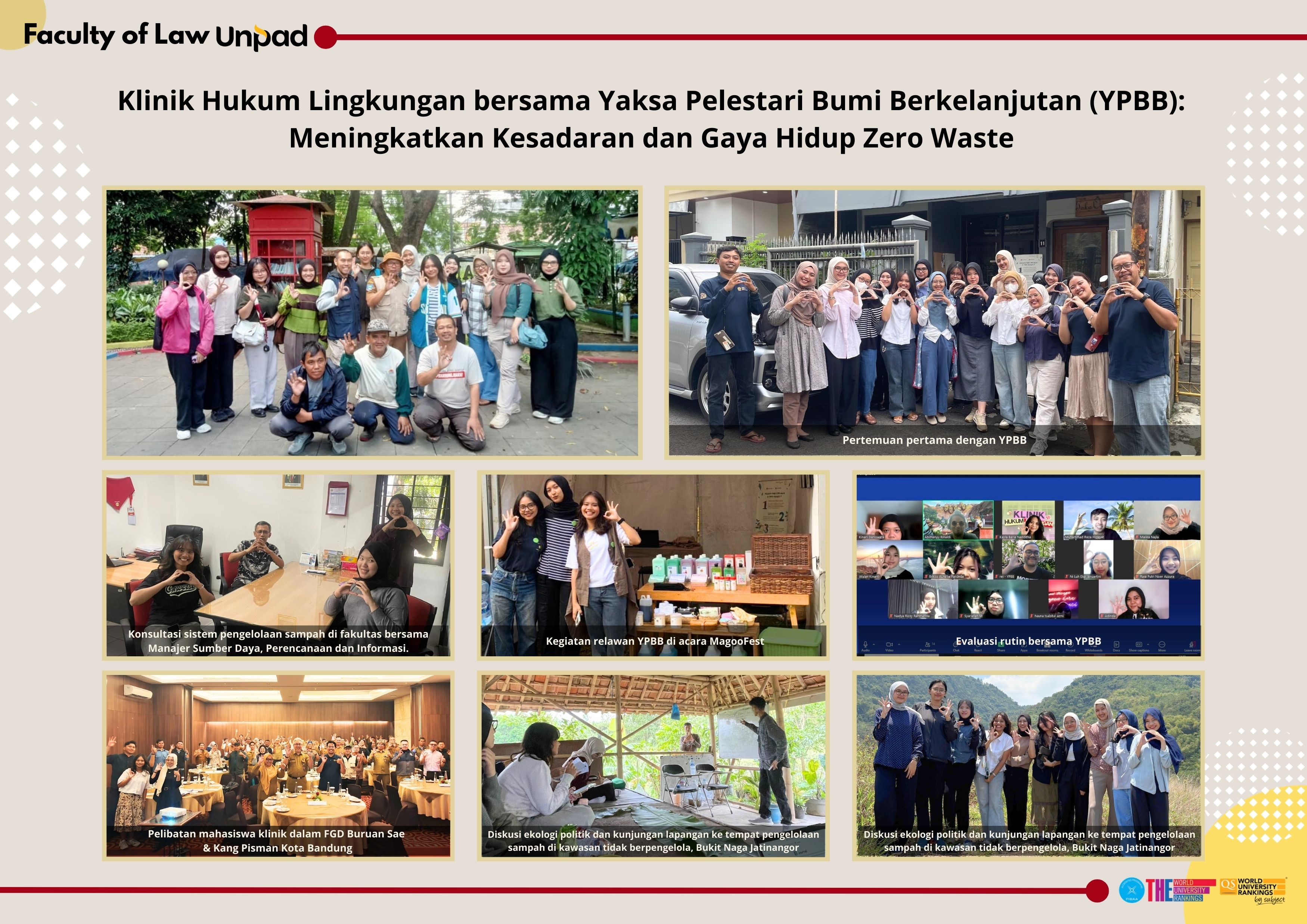
Tuesday, 18 November 2025 – The Environmental Law Clinic at Universitas Padjadjaran (Unpad) partnered with Yaksa Pelestari Bumi Berkelanjutan (YPBB) for a six-week program. The clinic was attended by 11 students from the Environmental Law, Spatial Planning, and Agrarian Law specialization programs, all enrolled in the same class.
The Environmental Law Clinic aims to introduce students to an interdisciplinary approach in addressing environmental issues, with a focus on waste management and the implementation of zero waste principles. The program also develops students’ skills in legal analysis, public policy advocacy, and understanding community-based waste management practices.
During the first week, students were introduced to the current macro-level waste management situation in Bandung. It was explained that many of the issues stem from structural and cultural challenges. Students also learned about the Zero Waste City concept and the eight stages of system setup, followed by a field visit to RT 09 Sukaluyu to discuss the local waste conditions.
In the second week, students studied the academic manuscript and draft regional regulations on waste management in Bandung. In the following weeks, they were introduced to practical waste management methods, including Takakura composting, translucent brick (Bata Terawang), and biopores. Students also practiced implementing the stages of creating a Zero Waste Office at the YPBB office.
In addition to participating in the full range of courses offered by YPBB, students were given the freedom to develop a final project that could directly impact the zero waste system on campus, particularly within the Faculty of Law. In collaboration with YPBB, the final project focused on designing an operational waste management system for the Faculty of Law. This included mapping waste flows from their sources, recommending sorting points, integrating zero waste practices into student activities, and designing monitoring and evaluation mechanisms. The goal is for this design to serve as a practical guideline for the faculty in creating a waste-free campus environment.
Students were also given the opportunity to volunteer in YPBB’s social activities. One such activity was the MagooFest held on Saturday, 8 November 2025, at Taman Fitness, Jalan Teuku Umar, Bandung. During the event, students served as front desk volunteers, actively educating visitors on the use of organic products, the impact of single-use waste, and the concept of refill stores as a sustainable consumption alternative. Through this experience, students learned to engage with the public, deliver environmental messages persuasively, and apply zero waste principles in public events.
The collaboration between the Unpad Environmental Law Clinic and YPBB represents a concrete step in raising environmental awareness, strengthening students’ capacity as future environmental law experts, and fostering a more sustainable and responsible campus environment.
This partnership also aligns with the United Nations Sustainable Development Goals (SDGs), particularly SDG 11 (Sustainable Cities and Communities), promoting responsible environmental management; SDG 12 (Responsible Consumption and Production), through the application of zero waste principles and waste reduction education; and SDG 13 (Climate Action), through efforts to reduce environmental impacts from waste production.
This activity is in support of the Sustainable Development Goals (SDGs)